Tuesday, October 23, 2012

Movies: Another Beauty and the Beast


Oh for the love of god.

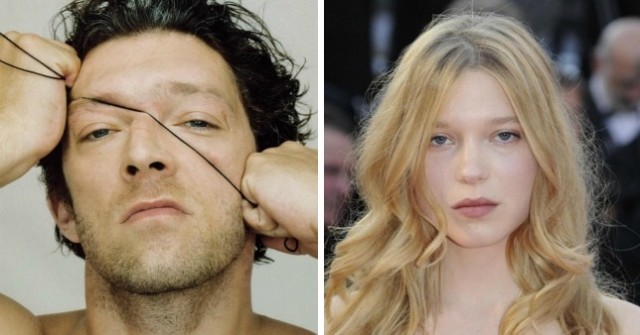
We have another Beauty and the Beast movie coming out (according to Maria Tatar's blog Breezes from Wonderland), this one starring Vincent Cassel and Léa Seydoux. The director, Christophe Gans, says "Although I will keep to a form of storytelling of this timeless fairy tale that is in keeping with the same pace and characters as the original, I will surprise the audience by creating a completely new visual universe never experienced before and produce images of an unparalleled quality. Every single one of my movies has presented me with a challenge but this one is, by far, the most exciting and rewarding.”

This is in addition to the Emma Watson Beauty and the Beast movie, the CW TV show and the ABC TV show. While doing multiple versions of the same tale makes it more possible for at least one of them to be good, one wonders if "East of the Sun and West of the Moon" or "Cupid and Psyche" might have been a better Beauty and the Beast tale to adapt at this point.

Tumblr Goodness: Fairy Tales for Twenty-Somethings

Classic fairy tales rewritten for tweeting, texting twenty-somethings

Yesterday, both Io9 and Flavorwire pointed us in the direction of a hilarious Tumblr blog called Fairy Tales for Twenty-Somethings, where our favorite fairy tales are facing quarter-life crises. It is my new favorite thing!

Here are a few and yes, a lot of these are not fairy tales, but they are funny, so I do not care:

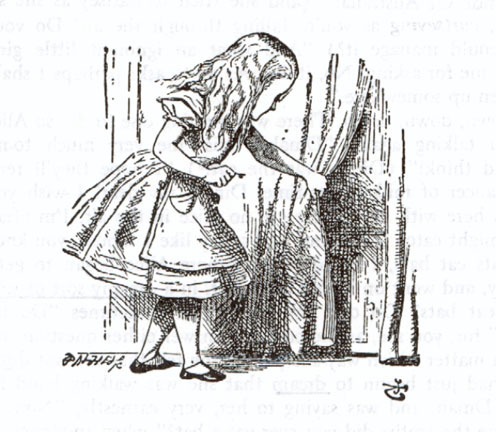
Alice in Wonderland (Children's Book):
The crazy thing is that eventually even Alice began to doubt whether what she’d seen down the rabbit hole had ever really existed. And it didn’t make her sad, there was nothing overly dramatic about it, it was just that now she understood how the world actually worked.
But then she was tagged in a photo by an old friend, by the White Rabbit. It was a faded picture of her and the Cheshire Cat, and, wow, it just brought her right back.

The crazy thing is that eventually even Alice began to doubt whether what she’d seen down the rabbit hole had ever really existed. And it didn’t make her sad, there was nothing overly dramatic about it, it was just that now she understood how the world actually worked.
But then she was tagged in a photo by an old friend, by the White Rabbit. It was a faded picture of her and the Cheshire Cat, and, wow, it just brought her right back.
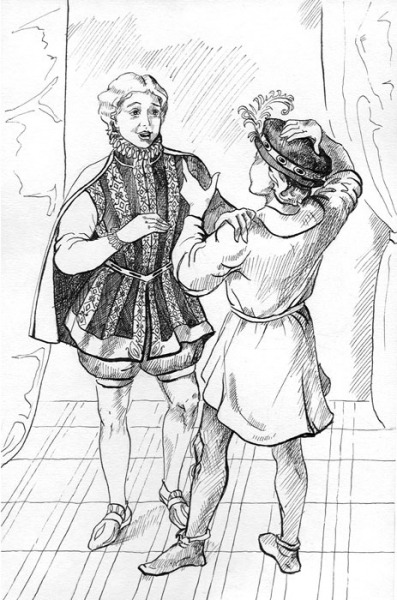
The Prince and the Pauper (Children's Book):

The prince and the pauper unfriended each other on Facebook because neither one could stand the other’s political status updates.

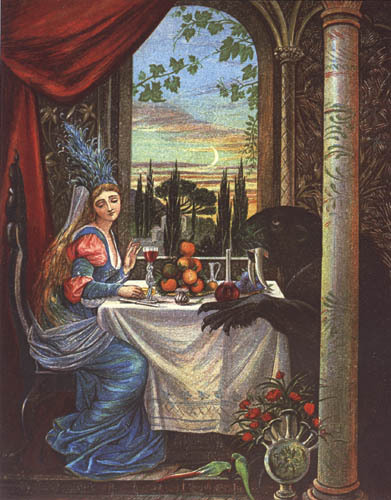
Beauty and the Beast (Traditional Fairy Tale): 
Beauty wanted to bring the Beast to meet her friends but she was nervous because they all had these super-hot boyfriends who worked in finance. She loved the Beast for who he was, she really did, but her friends were shallow and judgmental.
“Maybe you should get some new friends,” Siri advised.
 Beauty wanted to bring the Beast to meet her friends but she was nervous because they all had these super-hot boyfriends who worked in finance. She loved the Beast for who he was, she really did, but her friends were shallow and judgmental.
“Maybe you should get some new friends,” Siri advised.
 
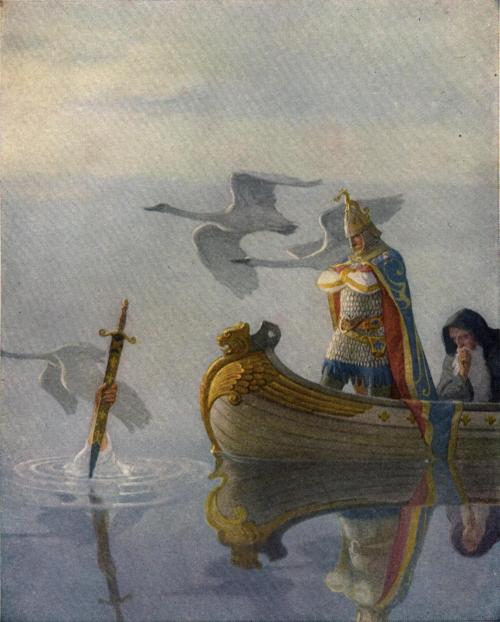
King Arthur (Legend):
After pulling the sword from the stone but before becoming king, Arthur went on a cross-country road trip / vision quest. He crashed on friends’ couches or, on a few nights, the back seat of his car. He went to Burning Man, stayed in the mountains of Montana for a few weeks, and learned to build a cigar-box guitar from some guy on the street in New Orleans.

When he finally arrived home, a wiser man, he thought, “That shit was awesome. I gotta find a way to do that all the time.”


After pulling the sword from the stone but before becoming king, Arthur went on a cross-country road trip / vision quest. He crashed on friends’ couches or, on a few nights, the back seat of his car. He went to Burning Man, stayed in the mountains of Montana for a few weeks, and learned to build a cigar-box guitar from some guy on the street in New Orleans.
When he finally arrived home, a wiser man, he thought, “That shit was awesome. I gotta find a way to do that all the time.”

The Tortoise and the Hare (Fable):
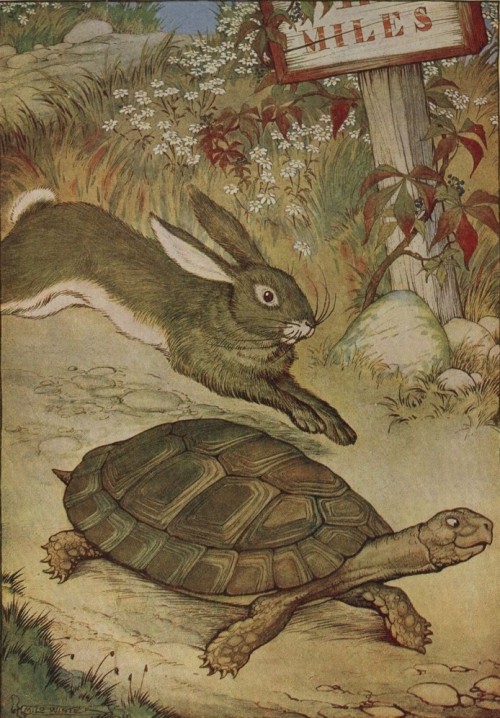
The tortoise and the hare met for coffee. They each casually mentioned their recent successes, secretly hoping to appear better than the other. As they walked their separate ways home it hit them at the same time: There never was a race. There is no destination. There is no winner.

Little Mermaid (Literary Fairy Tale):

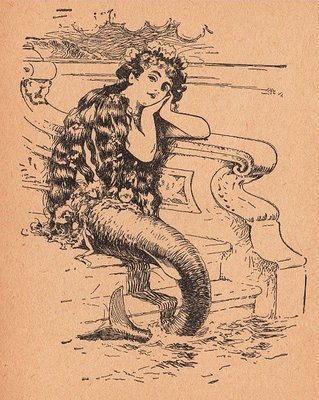
the little mermaid was a human now but sometimes at an upscale party someone would say to her, “that’s a very unusual accent. where are you from?” her past haunted her. she could never escape who she used to be.


the little mermaid was a human now but sometimes at an upscale party someone would say to her, “that’s a very unusual accent. where are you from?” her past haunted her. she could never escape who she used to be.


The Ugly Ducking (Literary Fairy Tale)
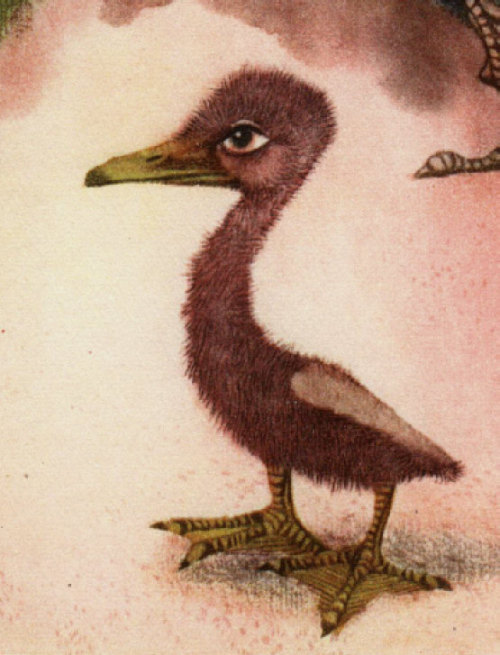
the ugly duckling read obscure works of literature in other languages and listened to indie music even the guys in the record store had never heard of. if i’m not going to be prettier than anyone, she thought, i’m at least going to be better than them.

The ugly duckling read obscure works of literature in other languages and listened to indie music even the guys in the record store had never heard of. if i’m not going to be prettier than anyone, she thought, i’m at least going to be better than them.

Chicken Little (Folk Tale):

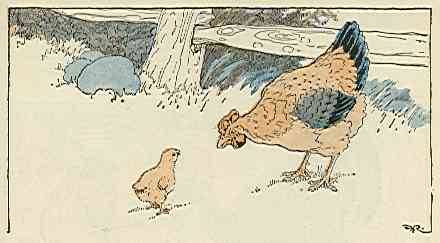
chicken little knew she was supposed to be in a good mood while out with her friends, but she just didn’t feel it. she had this certainty that something was wrong even though she couldn’t name what it was. then she started going to therapy and realized all these things about her childhood she’d never thought of in that way. she also started doing hot yoga.

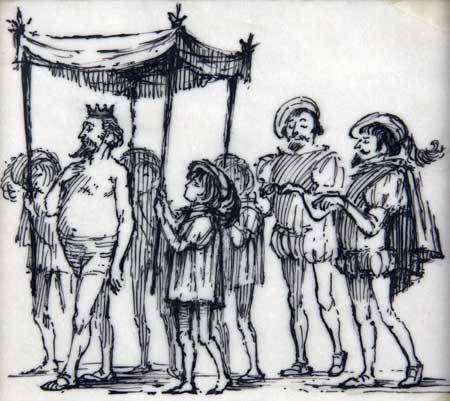
The Emperor's New Clothes (Literary Fairy Tale):
the emperor bought a new fedora but all his friends thought he looked really stupid in it.
 the emperor bought a new fedora but all his friends thought he looked really stupid in it.
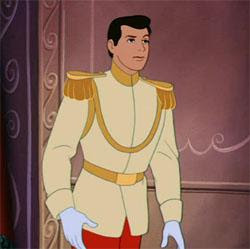
Cinderella (Traditional Fairy Tale):
when cinderella left the ball right before midnight, the prince stood in the doorway and watched her go. “i’m so stupid,” he said to himself in bed that night. “did she want me to kiss her? maybe i should’ve kissed her. fuck, i should’ve just kissed her.”
 when cinderella left the ball right before midnight, the prince stood in the doorway and watched her go. “i’m so stupid,” he said to himself in bed that night. “did she want me to kiss her? maybe i should’ve kissed her. fuck, i should’ve just kissed her.”

Thursday, October 18, 2012

Article: "In Defense of Real Fairy Tales"


Recently, the fairy tale blogosphere has been abuzz with a recent article by Adam Gidwitz, the author of A Tale Dark and Grimm and now In a Glass Grimmly. It is in response to the constant complaint that fairy tales are too scary for children, a favorite point of contention for me. He is enthusiastically in favor of reading original fairy tales to children and draws from personal experience:

While adults wring their hands over whether children should be exposed to the real Grimm, young people themselves have no such ambivalence. In my visits to schools I have witnessed the introduction of Grimm tales to thousands of children—elementary students in urban London, middle schoolers in rural Texas, high school students in suburban Baltimore—and the reaction is always the same: enthusiasm that borders on ecstasy.
Which is, I admit, a little strange. Grimm fairy tales are 200 years old. They do not feature guns or robots, they do not involve cliques or internet slang, they do not mention LeBron James or the WWE. They are not televised or computerized. They are the most primitive form of entertainment still in existence. How do they bewitch an auditorium full of tweens and adolescents? Why, contrary to adults’ expectations and apprehensions, are fairy tales so perfectly appropriate for these children?

He discusses how children LOVE violence and gore:
The children I meet literally cannot believe that Cinderella’s step-sisters dismember themselves to get the slipper to fit. And they really cannot believe that adults have been peddling the sweet, anodyne version of the story all this time, when there was another version that was so much cooler.
He talks about how fairy tale violence is much more digestible than real violence:
The explanation, I think—and this is the second reason that the real fairy tales are uniquely appropriate for children—is that the tales are not at all realistic. I once taught a six-year-old girl who suffered from insomnia. Her affliction was cured when we discovered that her mother let the girl watch the eleven o’clock news. This first grader could not sleep because she was watching accounts of fires, assaults, and deaths right before bedtime. But she loved Grimm fairy tales. For fairy tales signal clearly to children—through simple, matter of fact descriptions of unearthly events and keystone phrases like “Once upon a time”—that the land of the fairy tale is decidedly not the external world.
Lastly, he spoke about my absolute favorite reason why fairy tales are so important to read to children, complete with violence and gore:
The land of the fairy tale is not the external world. It is, rather, the internal one. The real Grimm fairy tale takes a child’s deepest desires and most complex fears, and it reifies them, physicalizes them, turns them into a narrative. The narrative does not belittle those fears, nor does it simplify them. But it does represent those complex fears and deep desires in a form that is digestible by the child’s mind. Sometimes I refer to this as turning tears into blood. Allow me to illustrate what I mean.
I often share the Grimm tale “Faithful Johannes” with groups of students. In this tale, a father decapitates his two children to save the life of his faithful old servant Johannes. This done, the old servant places the children’s heads back on, and they leap and frolic and play as if nothing at all has happened. After sharing this tale, I typically ask kids, “How would you feel if your parents cut off your head to save an old friend of theirs? Imagine, of course, that you came back to life—but they didn't know that you would. How would you really feel?”
What amazes me about kids’ responses to this question is that, not only are their answers always the same, from Los Angeles to London and everywhere in between, their answers almost always come in the same order. Maybe it has to do with the order in which I call on children. I usually call on a serious looking girl first. Her answer is almost always, “I would feel betrayed.” Next, I call on another girl. “I would feel angry.” Then, I call on a boy who looks like he’s going to jerk his arm out of its socket, he’s raising his hand so strenuously. “I would cut off their heads, and then I would shoot them with a machine gun, and then I would…” I let him indulge in his patricidal fantasy for a few more sentences, and then I say, “So you would want revenge?” And he says, “Yeah, revenge.” And then, usually fifth or sixth, a boy or a girl will say, “I would feel like maybe my parents didn't love me enough.” Which silences the room. Finally, I say, “I hope none of you have ever experienced any of those feelings. But I know I have. And maybe some of you have, too.” And the kids nod their heads and stare.
“Faithful Johannes” takes a host of amorphous, ambiguous, and uncomfortable feelings and puts them into terms that children know intimately—the terms of physical pain.
This is the exact approach that Gidwitz takes when he writes his books. A Tale Dark and Grimm (see my review) begins with "Faithful Johannes," and then follows the path of the betrayed children until they find some peace.  While the tone of the story is glib and gory, he packs it full of visceral emotional lessons and experiences.

He drives it home by discussing how children put themselves in the mind of every character. The fairy tale characters are consciously empty vessels into which we pour ourselves:

In most fairy tales, the great wide world takes the form of a forest. Bruno Bettelheim, the great psychoanalytic interpreter of fairy tales, explains, “Since ancient times the near-impenetrable forest in which we get lost has symbolized the dark, hidden, near-impenetrable world of our unconscious.” Forests are where our fears turn into wolves, our desires into candy houses, where our fathers turn us loose to fend for ourselves, where the emotional problems we face at home are physicalized, externalized, and ultimately conquered. Where tears are transformed into blood.
This physicalization of emotion is so powerful for children because every child has fallen and bruised himself. Every child has felt hungry, even if only in our well-fed, First World way. Every child has had a cut that has bled. And so every child knows that the bruise stops hurting, the food does eventually come, the blood clots, scabs over, heals. When a child reads about emotional pain—betrayal and loneliness and anger at parents—in terms of blood, he comes to understand that those pains too will heal, that salty tears also dry.
He quotes G.K. Chesterton  who states something rather comforting about fairy tales, and rather depressing about realism:
G. K. Chesterton, in defending fairy tales from Victorian do-gooders, explained, “Folklore means that the soul is sane, but that the universe is wild and full of marvels. Realism means that the world is dull and full of routine, but that the soul is sick and screaming. The problem of the fairy tale is—what will a healthy man do with a fantastic world? The problem of the modern novel is—what will a madman do with a dull world?” Children are indeed healthy men in a fantastic world. From their perspective, they are the only ones who make any sense, and everyone else, adults in particular, are shadowy incomprehensibles. (I tend to agree with children on this point.)
In the end, he advises us to trust our children. They know what is good for them and what is not. If a book is too scary or too much for them, they will put it down. If a book is good for them, as many sleepy parents will attest, they will demand it again and again.

This article is probably the most concise and well-stated argument for scary fairy tales that I have ever read. It sums up my feelings on the matter perfectly!


Books: Grimm Takes for Young and Old by Phillip Pullman


SurLaLune turned my attention to the fact that Phillip Pullman's version of the Brothers Grimm's fairy tales has come out! Check out the really beautiful book trailer!:


From the sounds of it, Pullman has really added some twinkle to the language of the stories. While still maintaining their fairy tale structure and rhythm, he has added tiny details that give you a sharper view of the story and appeal to your senses. The Telegraph states that the stories "have a swift yet stately sense of movement, the storytelling stripped down to the very basics. They manage to be gripping, even if their structure has a hypnotic regularity." However, Pullman has added "sprinklings of wit."

It is going on my Amazon wish list! 

TV: The CW's Beauty and the Beast


No, I have not watched it yet. I feel very reluctant to watch it, as I feel that the story is of a beauty and a beast, not a beauty and a hot guy with a scar. I could potentially be sold on the beauty and a guy who occasionally Hulks-out.

That is the question: is Beauty and the Beast about a woman seeing someone's inner beauty and falling in love with it despite his appearance? Or is it about a woman who changes a person who acts beastly for the better? This show seems to be leaning towards the latter, but for me, that gets into borderline "You can change him" and "Even though he abuses you, he still loves you" territory. (see my feelings re: Belle and Rumpelstiltskin in OUAT). I think the Disney Beauty and the Beast strikes the balance between the two interpretations pretty well, same with La Belle et La Bete by Jean Cocteau.

Either way, Io9, yet again, has offered a deliciously snarky review of the first episode called "The Sexpocolypse that is The CW's Beauty and the Beast:"
"The CW's Beauty and the Beast is a masterpiece of the art of sexy sex. Everything on this show was "sexy." At first we thought this was just a lark — but when The CW starts rolling out the pursed-lipped hospital ID cards, and sexy daylight streaming police offices, on top of sexy ladies fight-moaning in sexy slomo, we realized... this is intentional. We're going to have so much fun with this show, you guys."
 See the rest of the delicious snark here, complete with spoilers. I will watch at least the first episode, I swear, but I am so behind that it might take a while.

In the mean time, see what George R.R. Martin, the original show runner for the 1980s Beauty and the Beast TV show, has to say about the new incarnation.

Tuesday, October 2, 2012

TV: OUAT Thoughts: Broken


Once Upon A Time is back and better than ever — thanks to one giant twist!
Snow/Mary Margaret is a BAMF!

Ok, I watched it, and I thought it was pretty great!

First, the intro. I thought I was watching the wrong show. We are in New York following this new guy around? But then it turns out he knows about Storybrooke, cuz he receives a postcard from there saying only "Broken." How can the carrier pigeon leave Storybrooke without getting killed? We do not know. Who is this guy? All signs point to Bae, but there are some interesting Peter Pan theories out there, since he is a man who looks like he is not happy with his grown up life and has some rather interesting apartment decorations. Also, the intro definitely reminded me of this classic from Lost. Best season starter ever.

Second, LUUURVED the Snow/Mary Margaret and Charming/David amalgams  Everyone seems so much more alive and proactive. And sassy. By far the best moment: when Snow admits to having a one night stand with Whale, and silences Charming's protests with "We were cursed," and moves right along. AND Snow, without hesitation, creates and uses a home made flame thrower. Badass. There are good points being made around the interweb about how suddenly everyone abandons small town laws and morality and goes directly back into fairy tale world dramatic gestures and medieval justice. And I kinda like it. It's like everyone has been released from whatever was holding them back as people. They can be fully themselves, make bold choices, take stands, and really live their potential. (Yes, Megan, it's called a curse was broken. I know, guys, but it is cool how it affects them.)

Third, I was so happy they did not spend too much time on the "Regina is evil, she is the reason for this, lets kill Regina" stuff. It was background for the far better emotional stuff that was going on with everyone. Snow even says, "Mr. Gold can wait," dealing with family is more important.

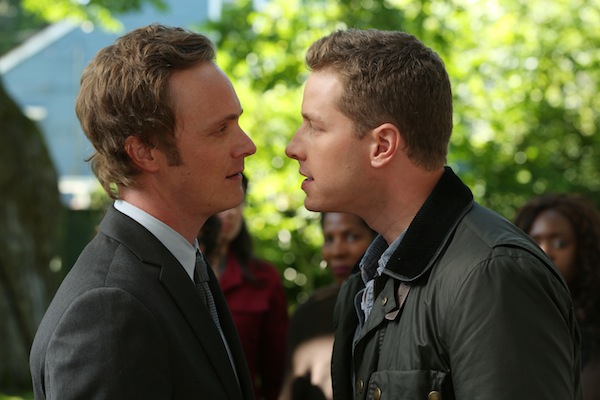
Fourth, Doctor Whale, you frustrating and intriguing bastard. Charming does not know who he is, and Charming is not his prince, as Whale says. This means he comes from another land than Charming (perhaps a fictional Geneva with secret lab castle?). Oh and I am sure tons of slash fiction was born from this image:

Dr. Whale vs. Charming
"You are not my prince." Make out, already.

Fifth, I was touched that Henry did not want anyone to kill Regina. I didn't really understand the whole character turn around, "YOU ARE NOT MY MOTHER" to "She is still my mother, please don't kill her." And then again "I never want to see you again!" But hey. I don't really expect much from Henry. 

Sixth, Yay! Emma didn't talk that much! Her one awesome moment was the subtle touch that awakened Regina's magic again. I cannot wait for them to explain that. Of course all the Swan/Queen slash writers are exploding with explanations. Seriously, the stuff writes itself.

Seventh, Gold and Belle. I was not as happy about it as I thought. I knew he was going to fuck it up, and that made me sad. It made me even sadder that Belle came back. It came across more as Stockholm syndrome, or "I must stay in an abusive relationship because he needs me" than "I will change you into a better man." I usually fight for Beauty and the Beast relationships, but Gold wasn't passionate and angry and let his feelings run away with him. He was cold and calculating and knew what he was doing, and he still did it. I worry that she will get hurt.

Lastly, Mulan, Prince Phillip and Sleeping Beauty. I must admit, I was not sold on that storyline when I saw it in the promos. It looked frikkin boring. And the storyline itself kinda was. But I was impressed by Aurora's acting. She charmed the pants off me. Mulan is a bit humorless and uninteresting, but hopefully she will warm up as she and Aurora, and maybe Emma and Snow create an awesome girl questing squad. OH huzzah for the CGI not sucking!  

These are just my thoughts, and if you want a hilarious and more detailed recap, see Io9. They do an excellent job.
Monday, October 1, 2012

TV: OUAT execs want to "move beyond fairy tales"


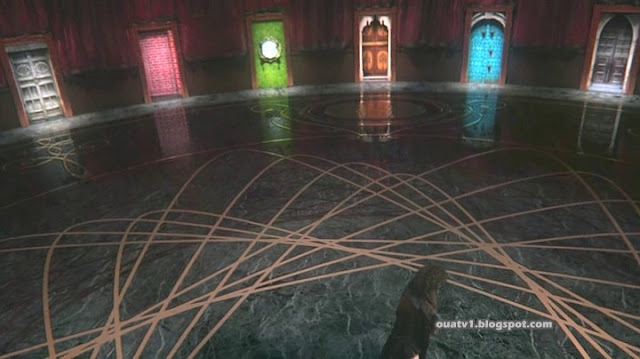
The doors to other worlds in Wonderland.

I KNEW IT! I knew it!

In an interview with Entertainment Weekly, Edward Kitsis and Adam Horowitz admit that they are planning to expand the Storybrooke universe beyond fairy tales:

Here’s what I find interesting about the characters you’re adding this season. Mulan is a Chinese historical figure. Captain Hook is an early 20th century literary creation and Lancelot is a fifth-century possible historical figure. Those aren’t fairy-tale characters.
KITSIS: Go back and look at the pilot when you see Henry’s book and the book flips [through the pages of illustrations from different stories]. Also the episode with the Mad Hatter when you see all the doors [to other worlds]. If you Tivo-pause those doors there are some that look different than what you might think.
HOROWITZ: Fairy tales are ground zero. They’re the first stories we hear … Will Chewbacca show up in Storybrooke? Probably not, because that’s a Lucasfilm property.
KITSIS: But he’s welcome to!
While sad for those of us who were hoping to see less-well-known fairy tales in Storybrooke (though I gave that up when I first heard the name "Maleficent"), this opens up whole new universes for the writers. Now that they have re-framed the show to focus on storybook characters, not fairy tale characters, us fairy tale nerds can just move on, and stop clinging to the "but that's not a fairy tale character" line, and embrace it.

AND it means Dr. Whale as Victor Frankenstein is even more likely!

Sorry, folks. I will have real content soon, not just OUAT stuff. Its just been really busy, and OUAT came out last night, so the internet is abuzz. I have yet to see it, but I will let you know when I do.